Antifragile Architectures: Tactical Layers of Productive Entropy
- Author: Borja Lomas Rodríguez
- Type of research: PhD (Doctoral Thesis)
- Lines of research: New Design Tools, Roles and Pedagogies
- Directors: Federico Soriano Peláez, Pedro Urzáiz González
- Defense: 2022 January
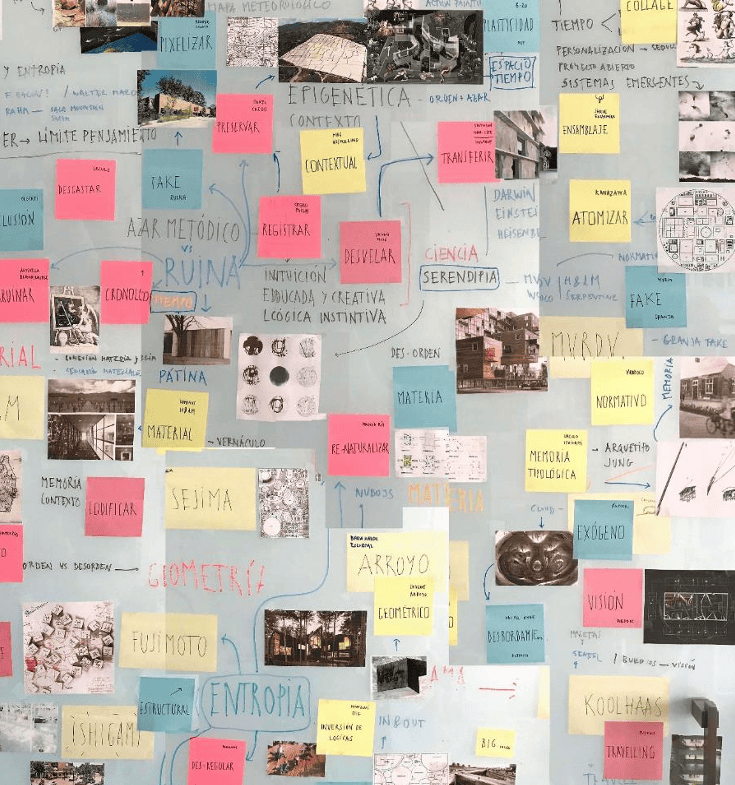
The responsiveness of a given system to uncertainty and entropy can be classified into two general positions: it remains unchanged in the face of change or it is transformed. When a system withstands modifications and accepts them without alteration, we say that the system is resilient; it is robust in the face of crisis, and the system maintains its integrity. If the system undergoes a transformation, this can be further divided into two other options. The first is that the alterations affect it negatively; the changes cause it to deteriorate or break, and we call it “fragile.” However, when the transformation serves to improve, we say that the system is evolving.
The term “antifragile” was recently coined by Nicholas Taleb, who defines antifragile as that which benefits from crisis, disorder, and uncertainty; it thrives and grows when subjected to stressors and uncertainty. This thesis investigates tactics employed in architectural projects where disorder and entropy, far from being considered negative elements to be reduced or simply eliminated, have served as opportunities and catalysts for the project.