Swinging Architectures: The Fish Farms at the Edge of the Sea in the Atlantic Peninsular Arc
- Author: David García-Louzao Araújo
- Type of research: PhD (Doctoral Thesis)
- Lines of research: Ecologies, Cities and Landscapes
- Directors: José María Sánchez García, Carlos Quintáns Eiras
- Defense: 2024 May
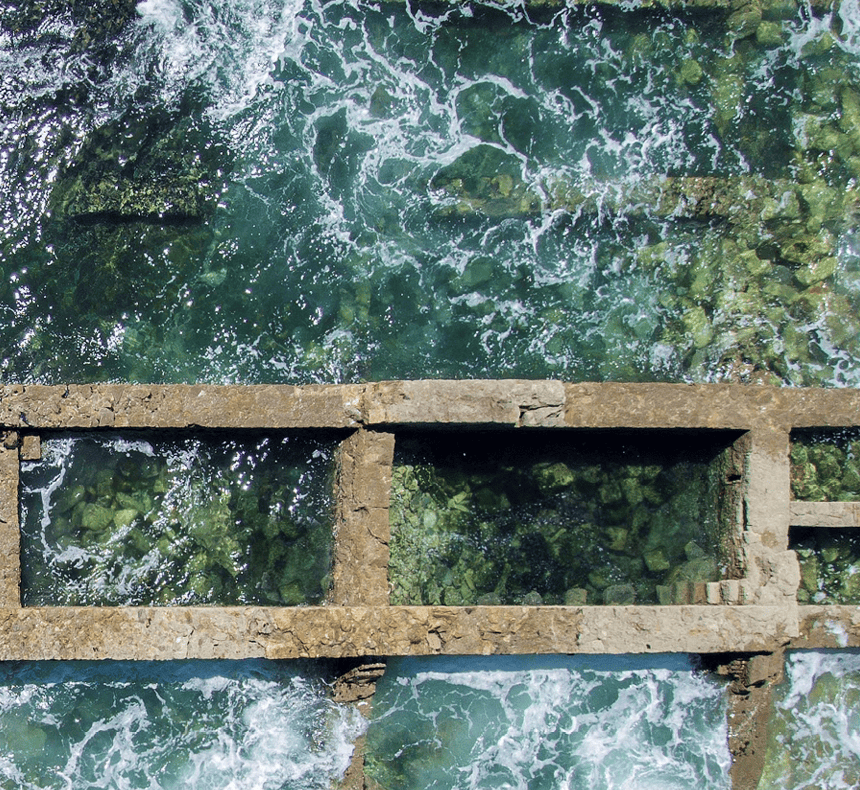
The present investigation traces a learning trajectory of the cultural and architectural heritage, establishing a narrative, environment, at the beginning of the productive constitution of the water edges in the Atlantic coastal territory. It focuses on the exchanges and transfers between aquaculture and architecture, through constructions raised from anonymous procedures constituted as productive infrastructures, almost hidden and hardly studied, which lie scattered articulating the swinging space of the Atlantic peninsular coast.
It is evident that, in contemporary times, post-ecological and industrial production strategies have colonized a large part of our planet, establishing new anthropological, landscape and cultural identities. Where different societies assume the artificial as a habitat, being a way for the transformation of different vital dynamics in the search for sustenance, creating a work-oriented territory.
The object and purpose of this research focuses on the location, graphic recording, observation and case study of a specific group of cetaceans, understood as marine nurseries located at the edge of the sea where food was stored and cared for.
These marine-terrestrial constructions are arranged as reflections or responses of society, when facing the problems of places at a given time. They are intense encounters with the territory, where it is possible to approach and follow the shadows or traces at the beginning of the domestication of the habitat at the water’s edge, linked to a specific way of interpreting natural forces where a series of codes and links were established through of artificial ecologies in the exploitation of natural resources.