Displacements, alterations, subversions: social housing architecture and dimensions of the collective in the city of Guayaquil
- Author: Juan Carlos Bamba Vicente
- Type of research: PhD (Doctoral Thesis)
- Lines of research: Space, Biopolitics and Geopolitics
- Directors: Sergio Martín Blas, María Augusta Hermida Palacios
- Defense: 2020 September
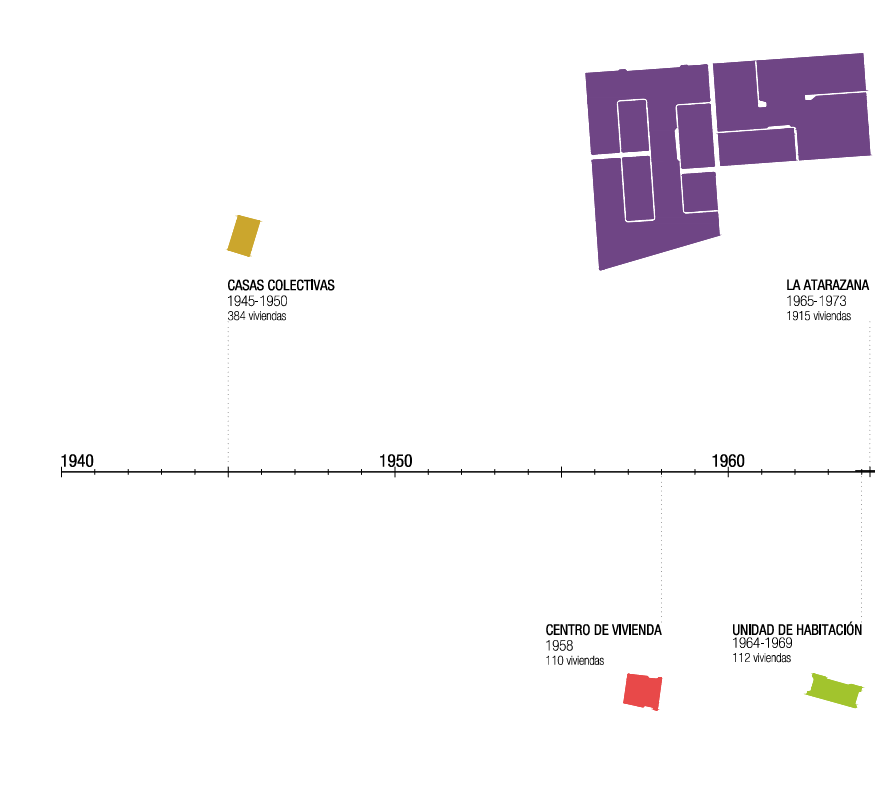
In Guayaquil, as in many Latin American cities, housing is organized around two opposing models: elite gated communities and informal settlements. This dichotomy stands in contrast to the social housing complexes promoted by the state between 1930 and 1970 under the ideals of the modern city. However, these complexes have been progressively “ghettoized,” reproducing, on a smaller scale, the processes of privatization and informalization characteristic of the fragmented city.
This thesis analyzes how these complexes have evolved into hybrid structures where opposing logics coexist, generating spatial micro-segregations and social micro-topographies. It argues that understanding this complexity requires studying the different phases of habitat production—from the original design based on collectivity to the everyday practices of inhabitants, shaped by insecurity, informality, and constant adaptation.
Using Guayaquil as an extreme laboratory, the research establishes connections between theory, architecture, and social practices, recognizing their potential as a new system of thought. The aim is to offer operational strategies for the regeneration of housing complexes in Latin America, valuing the everyday as a key to understanding and transforming urban reality.