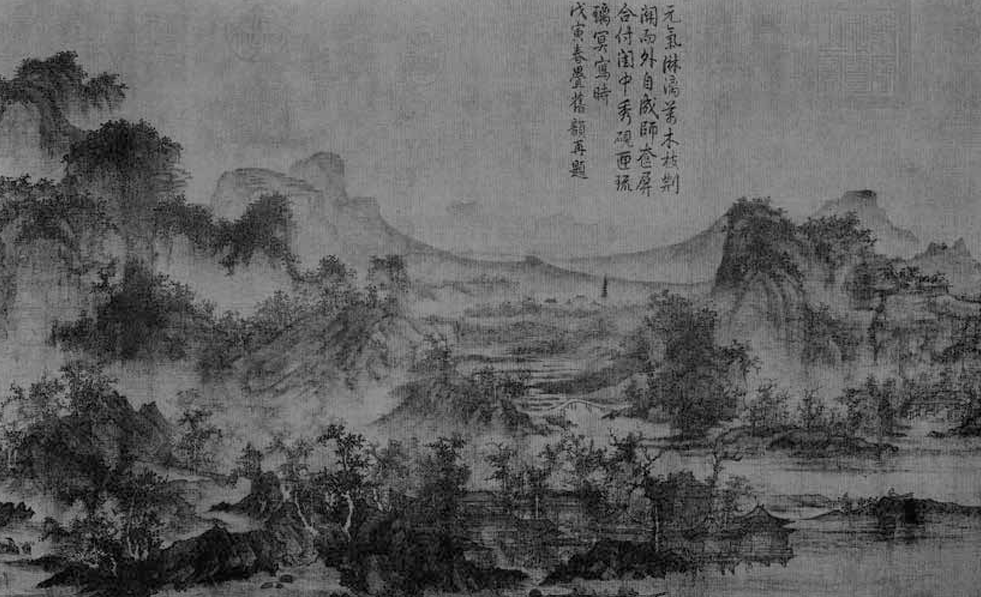
Painting and architecture are two different art forms. Painting tends to have a stronger personal meaning than architecture, possibly because architecture must comply with many rules to be functional and habitable. From the perspective defended in this thesis, many distinguished Western artists are also architects; they use the organizational relationships of pictorial space and its aesthetic rules in building design, providing examples where both disciplines communicate and mutually influence each other. Western art theorists have constantly explored the relationship between painting and architecture, confirming and emphasizing their interdependence. However, in the history of Chinese art, this situation is not as common.
The aim of this thesis is to apply the Western method of aesthetic classification to analyze the compositional characteristics of shanshui painting and compare them with Wang Shu’s architectural interpretation, in order to describe the fundamental idea behind the architect’s personal vision.