Objects and Houses: Klas Anshelm's Architecture without Rhetoric
- Author: Lorenzo Gil Guinea
- Type of research: PhD (Doctoral Thesis)
- Lines of research: Heritage and Identity
- Directors: José Manuel López-Peláez Morales, Héctor Fernández Elorza
- Defense: 2025 March
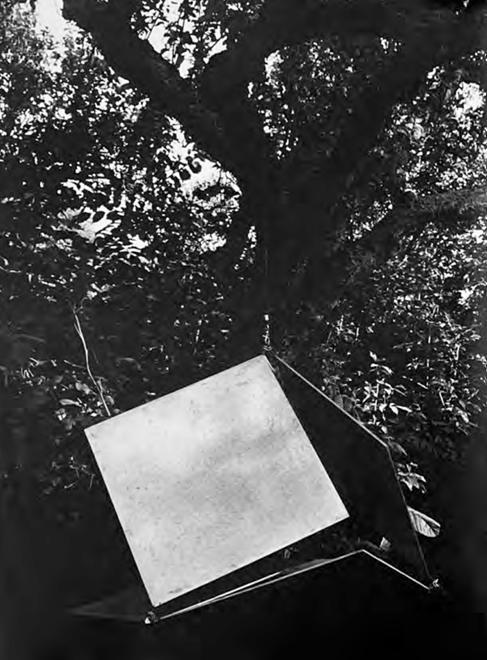
Objects and Houses (Föremål och Hus) is the name of the exhibition that Klas Anshelm organized in the autumn of 1972 at the Official Art Gallery of Lund, which he himself had built. It showcased sculptures, installations, and houses. Some were scandalized and took the exhibition as a disrespect towards art. Without beauty.
Klas Anshelm may be a little-known architect. Perhaps that is why I want to approach him. His work, silent, has remained hidden in the architectural landscape, overshadowed by more prominent and relevant authors and works. Of a reserved nature, Anshelm rarely spoke of his work. The few words accompanying his publications are limited to pointing out objective issues. There is nothing in them that can reveal his interests. Despite living and working for 30 years in a city like Lund, home to one of the most important universities in Sweden, for which he built numerous buildings, he did not engage in any teaching activities. He also did not write about architecture or any other architect. It was not due to a lack of knowledge; it was more of an ethical position: what he had to say, he had already built. Even in his studio, he did not express a didactic vocation. He did not seem interested in transmitting knowledge that he thought was essentially accessible to everyone. His was an anonymous tradition. Neither masters nor disciples. The earth, the sun and the winds, customs, life, and the architecture that had embraced them spoke for themselves.
The thesis analyzes his work from the work itself, through the study of the original documentation that is preserved. It does so by assuming the position of the architect, aware that we are, to a large extent, a reflection of our surroundings, of the people and the environments that accompanied us in our childhood and youth. Ultimately, a reflection of our House, understood as a fertile, vast, and intimate place at the same time.
The thesis seeks to recognize that substrate. His childhood, his sources, his teachers at Chalmers, his first friends and collaborations left a mark on him that is perceptible: a joy in work and a gaze; a childlike, primordial gaze, seeing things as if for the first time, which determines his later work. Thus, the framework is established under which the thesis analyzes his work.
The name of the exhibition is taken, and some objects and houses are selected; examples, if one wishes to consider them lesser, within a production that includes buildings of greater importance and magnitude. In them, certain issues are silenced, obscured, and thus others are perceived with greater intensity. It is in these works where the thesis tries to identify the essential and permanent aspects of his architecture, the traces of his creative and life process.
All of them, Objects and Houses, speak to us of a domestic architecture, grown from the very earth. Imperfect, open, alive, it takes root in what surrounds it and in the people who inhabit it. Half-finished, it accompanies and accepts life. The house is then both dwelling and nature. It brings together the most extensive and the most intimate, the territory, with the most primitive and essential aspects of being human.
Thus, his architecture adds to a tradition, that of those who believed in a simpler life and architecture, free of manners, representation, and cultural symbols. Under this perspective, the architect, like the gardener, was to limit himself to caring for, pruning, and revitalizing, on one side and the other, based on knowledge of the environment and tradition, the house, which would grow, like a plant, organically, from the very earth, according to its own laws, depending on the climate, the soil composition, and the place. Like the discreet gardener, the architect remains behind the work, along with all his effort, will, and knowledge. The work, anonymous, then integrates into life naturally and permanently, receiving its own beauty, as if it had always been there. Without rhetoric.