Possibilities and Constraints in the Use of Urban Data and Behavioral Geography for the Evolutionary Development of Urban Design Projects
- Author: Daniel Sarasa Funes
- Type of research: PhD (Doctoral Thesis)
- Lines of research: Digital Territories
- Directors: Javier Monclús Fraga, Javier Monclús Fraga
- Defense: 2024 June
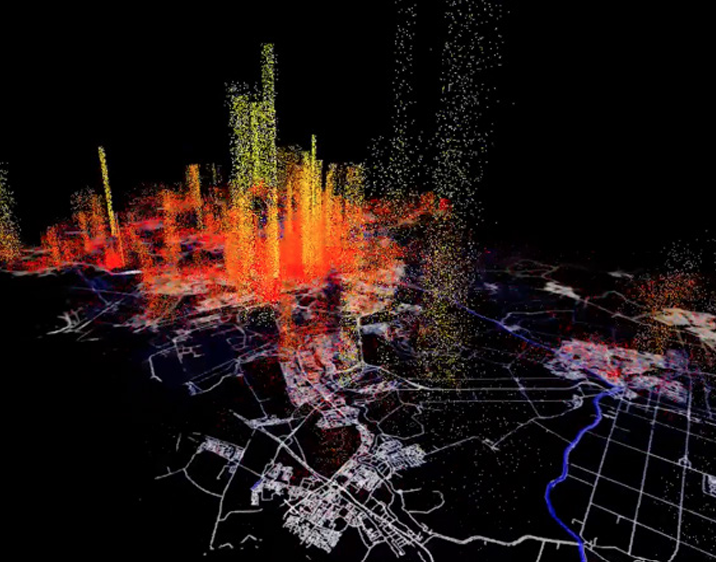
A future urban institute of digital design should know how to harness the characterization of flows through “big data” to identify new opportunities for generating architecture designed to go with the organic currents of the city. To this end, the development of urban design projects can benefit from the advances made by behavioral geography—starting with Kevin Lynch—regarding our perception of urban design.
From a methodological standpoint, it is pertinent to systematize the application of data science to the measurement of the “success” of generated projects, especially considering how city inhabitants perceive and visualize the city in their minds, as a preliminary step to adjusting such projects in a quasi-permanent process of reconfiguration, trial and error—analogous to the evolutionary processes that occur in nature.
It is therefore appropriate to establish the possibilities, limitations, and fields of application of a participatory, “agile,” or “evolutionary” urban design that aligns with the organic or “ecosystemic” nature of the city.
The thesis has a dual focus. On one hand, epistemological, insofar as it proposes that flows (and the data that characterize them) can serve as a source of inspiration for projects and for a deeper understanding of the built environment. On the other hand, methodological and practical, since its final product is the development of a digital urban design methodology that incorporates open innovation and near real-time feedback on the success of what is built.