The unseen: atlas of (in)visibility
- Author: María Dávila Pérez
- Type of research: EGP (End of Grade Project)
- Lines of research: Art, Architecture, Media
- Directors: Francisco Arqués Soler, Concepción Lapayese Luque
- Defense: 2024 June
ABSTRACT
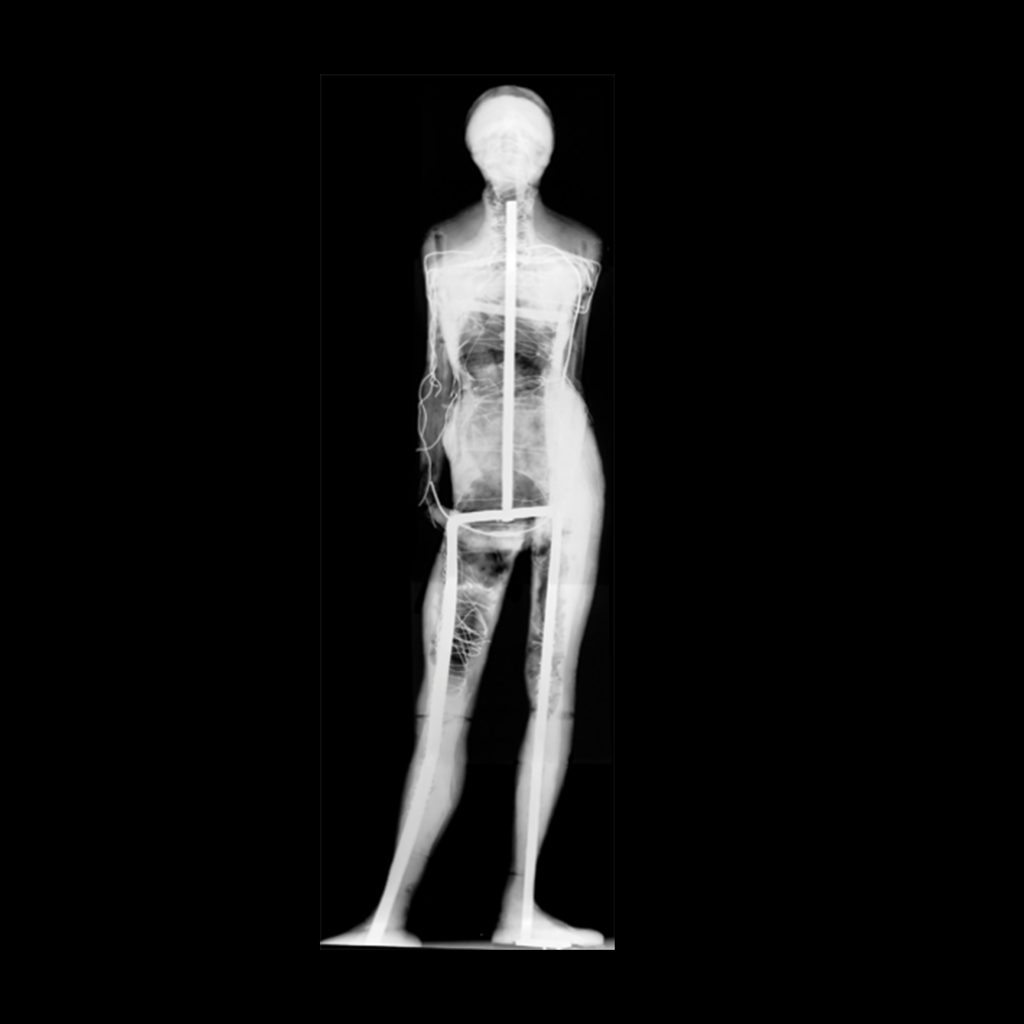
This research focuses on the study of works of art and architecture through the concept of the occult, exploring the multiple ways in which a concealment can manifest itself. Through an exploration of an atlas of works and an atlas of concepts, these converge to reveal some layers of truth, though probably not all, as this work focuses on visual perception without involving the other senses.
The research is based on Heidegger’s conception of truth, understood as unveiling, which considers the hidden as a necessary condition for the visibility of truth. Perniola’s study of unveiling and covering has been fundamental in understanding that truth is not only found in what is visible but also in what is hidden behind garments and veils.
With a clear definition of the concepts surrounding the unseen, an analysis of the works is carried out by means of a diagram in which the gradients of concealment and covering are measured. The research seeks to study the dynamics between the visible and the invisible, the revealing and the hiding, which are essential to understanding truth in its totality. The study of various works reveals that the devices of concealment are varied and that the relationship between the spectator and the work must be dynamic in order to reveal all its interpretations.
Finally, it should be stressed that this analysis is not categorical, but is intended as a tool to invite others to approach the occult and to reveal their own concerns, thus enriching the initial research.